Many women navigating PCOS feel isolated and lack tools to manage symptoms effectively
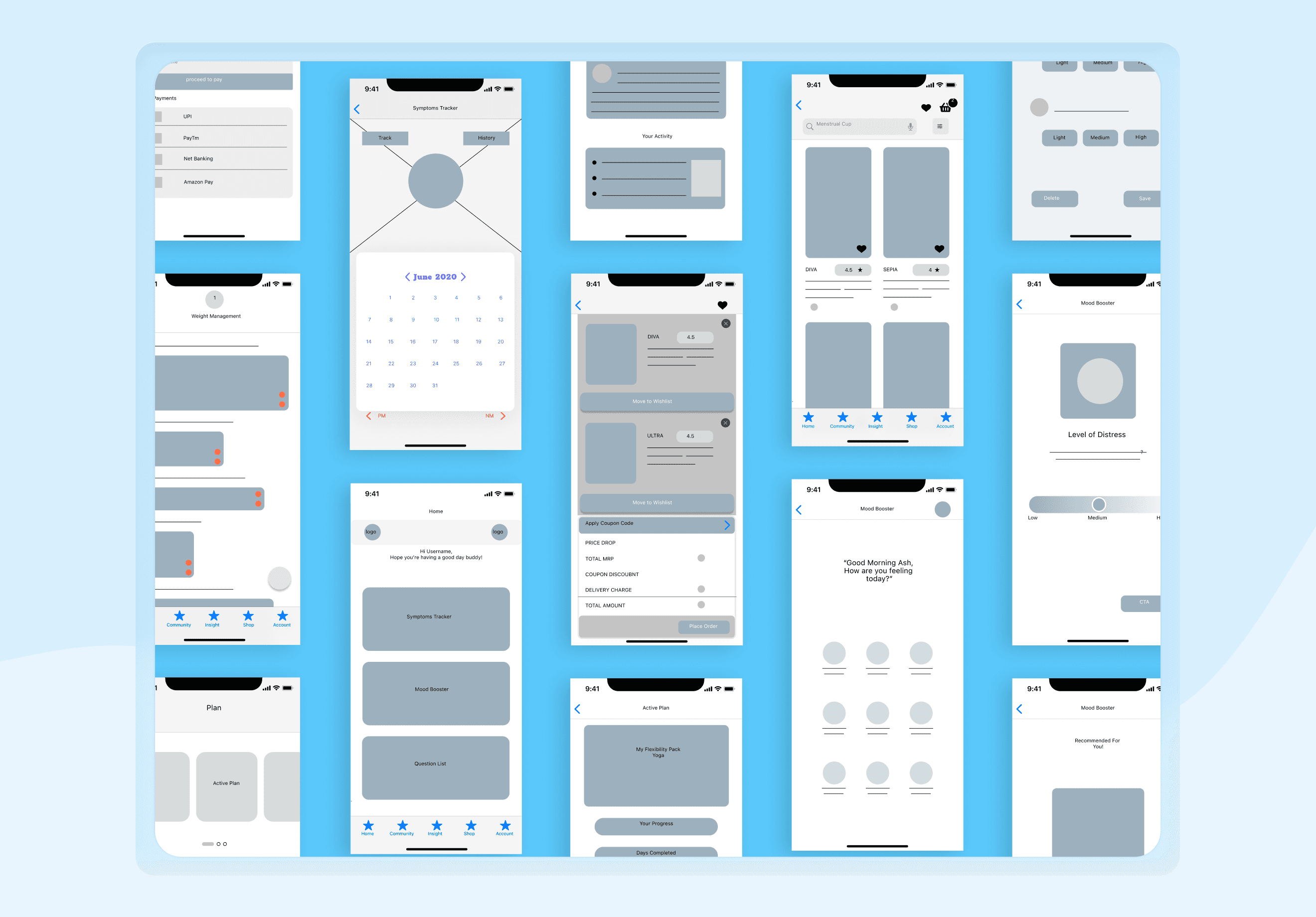
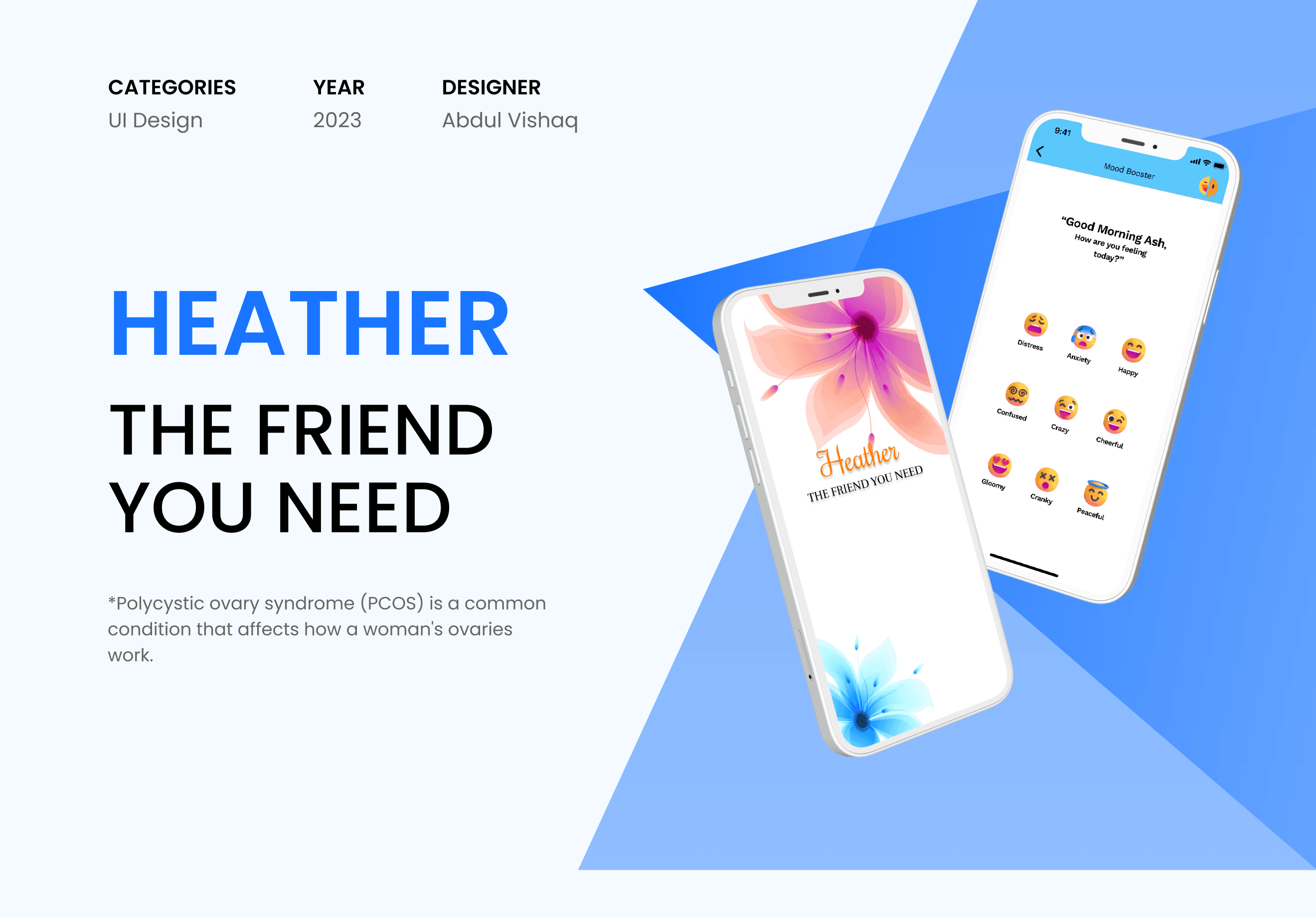
Heather is a wellness-focused mobile app designed for women navigating PCOS. It goes beyond cycle tracking to serve as a compassionate digital companion—supporting both physical and mental well-being. The experience is built around trust, calmness, and clarity, offering a human-centered approach that replaces clinical tones with care and understanding.
Problem & Research
Many women with PCOS face a complex mix of symptoms—irregular cycles, emotional fatigue, and lack of reliable guidance. What’s missing from most apps is empathy.
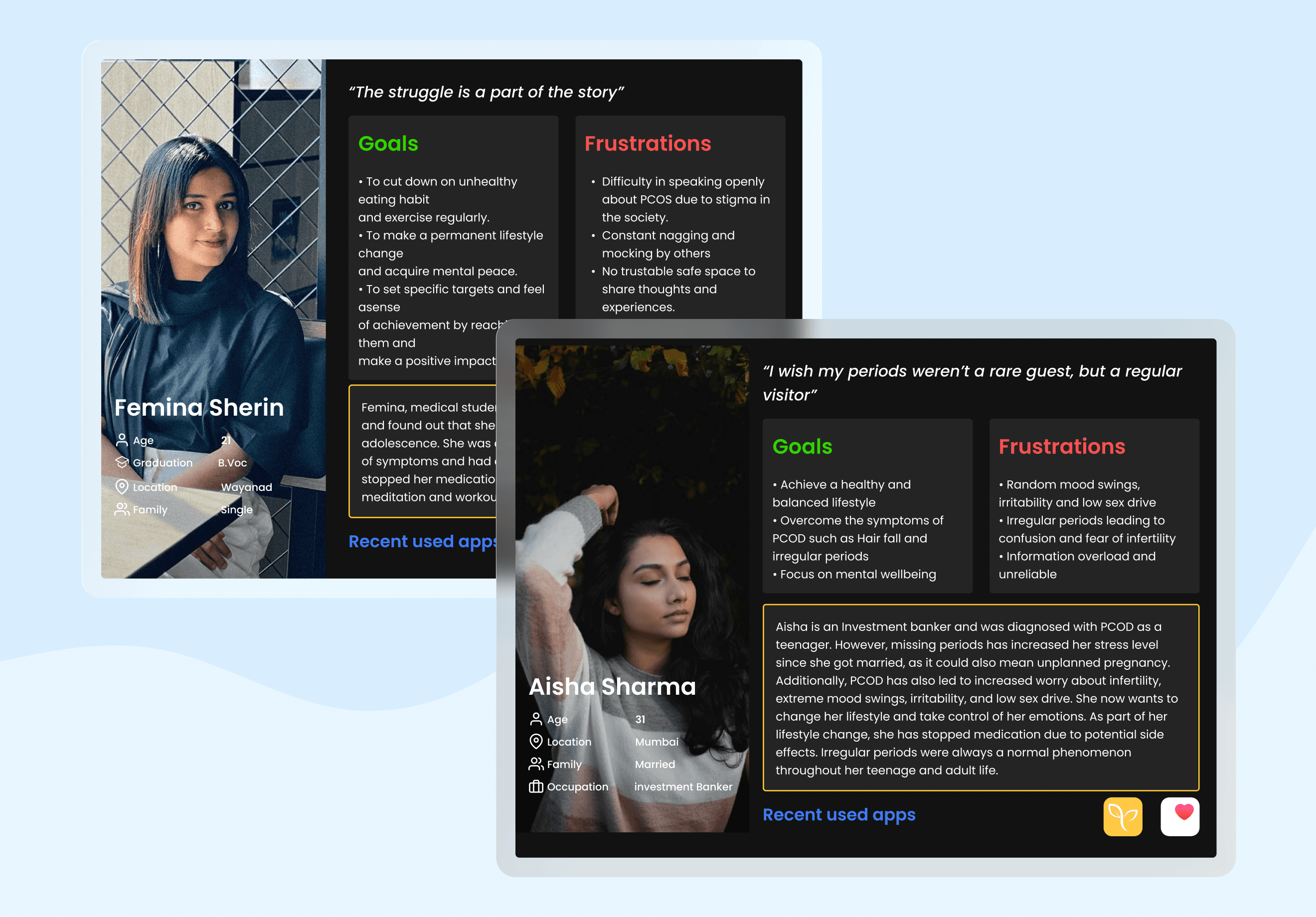
Through user interviews and secondary research, I uncovered a recurring pattern:
Clinical tools feel cold
Advice is often too generic
Users want gentle, non-judgmental support
Heather started with one central question: "How do we make users feel safe and supported every time they open the app?"
The Vision
Craft Heather as an emotionally intuitive companion—a platform that listens, guides, and adapts to each person's unique PCOS journey.
Focus areas:
Trusted tracking
Mental health nudges
Gentle educational content tailored to emotional context
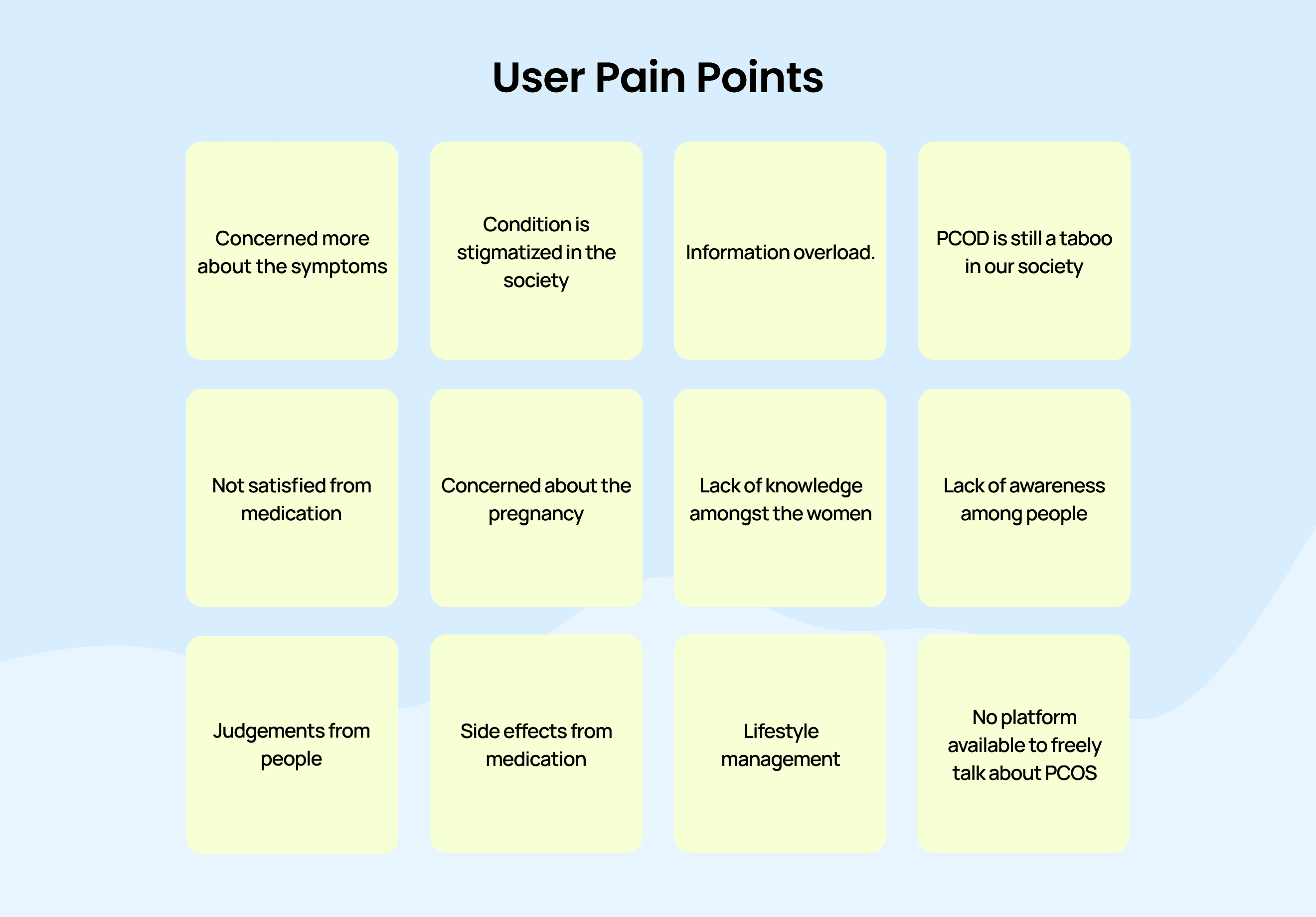
Problem Discovery & User Research
Research Methods:
1:1 interviews with women managing PCOS
Competitive benchmarking of mental health & cycle tracking apps
Empathy mapping and mood journaling observations
Key Findings:
Users felt existing apps were “cold” and too focused on metrics
Many preferred flexible journaling over rigid mood tracking
There was a lack of gentle emotional prompts tailored to daily energy levels
Privacy and a sense of control were recurring priorities
These insights shaped the product’s foundational UX strategy—centered on clarity, empathy, and adaptability.
Mapping the User Journey
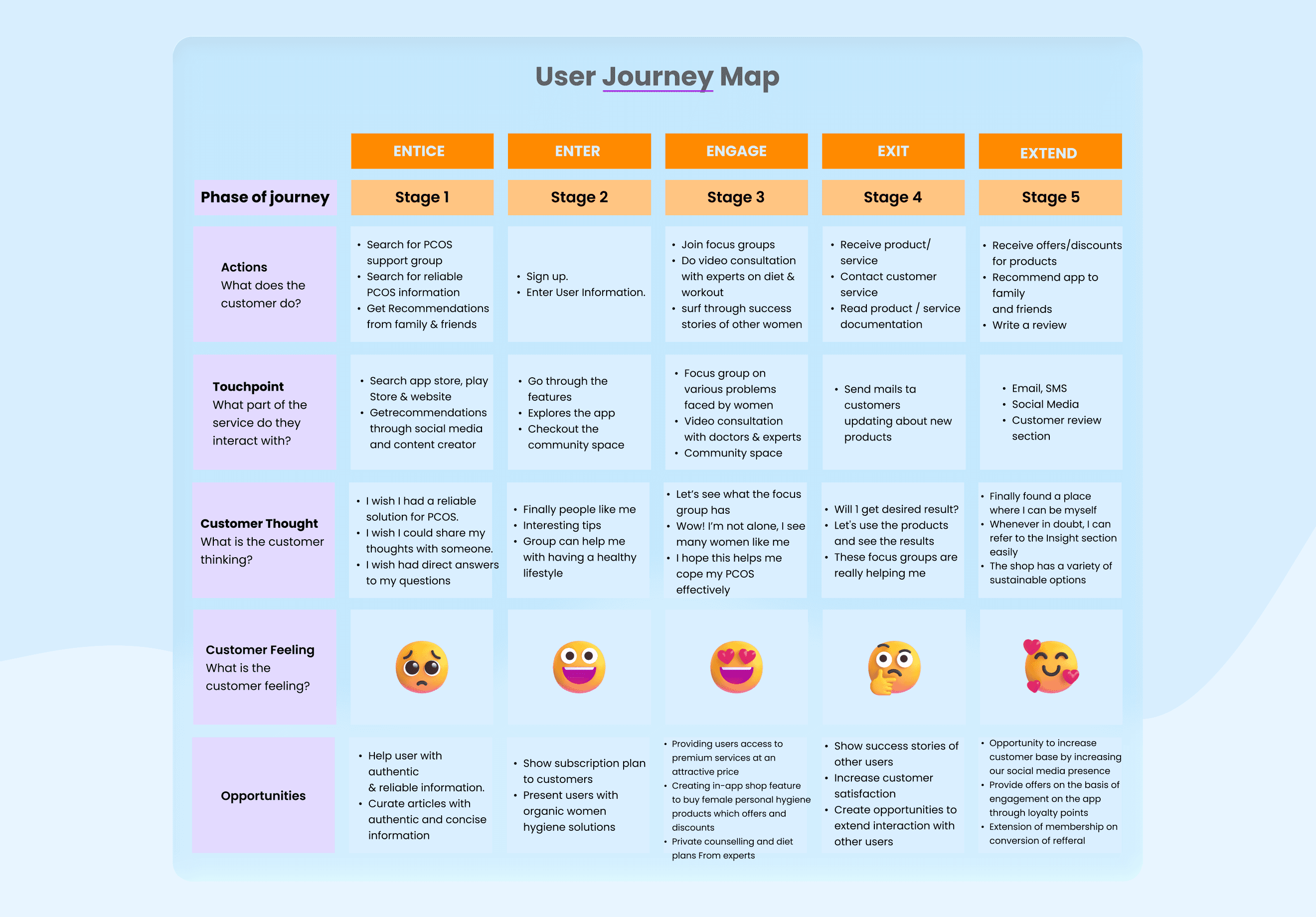
Building on the insights from user research, I created a detailed User Journey Map to understand how users interact with Heather at every stage of their experience. This visual framework captures user actions, thoughts, feelings, and touchpoints — from initial awareness to ongoing engagement. By mapping these stages, I was able to identify emotional highs and lows, uncover unmet needs, and spot opportunities for design interventions that deliver clarity, empathy, and long-term value.
Learnings
Designing Heather revealed that emotional design isn’t a layer added at the end—it’s part of the product’s core structure.
Subtle, affirming interactions build user trust
Simplicity in flow allows emotional complexity to surface naturally
UX choices—timing, tone, pacing—carry as much weight as features
Above all, emotional safety must be designed into every interaction, especially when serving users managing health challenges.